About
About the project
A research laboratory funded by the Global Basic Research Laboratory program of the National Research Foundation of Korea (NRF). We develop biochar-graphene-based conductive carbon-sequestering cement composites, apply them to structural members, and pioneer sustainable structural maintenance through self-sensing and finite-element analysis.
Program
Basic Research Laboratory, Pioneer type (BRL)
This laboratory is a Basic Research Laboratory (Pioneer type) project under the group-research support (R&D) program of the National Research Foundation of Korea (NRF). The project, "Development of Carbon-Sequestering Concrete Using Biochar-Based Graphene and Its Application in Structural Components," runs for about 33 months. Researchers in structural engineering, construction materials, and chemical engineering collaborate across disciplines.
- Program
- Basic Research Laboratory, Pioneer type (group-research support R&D)
- Funding agency
- National Research Foundation of Korea (NRF)
- Grant number
- RS-2024-00408370
- Project period
- 2024-08-01 to 2027-04-30 (about 33 months)
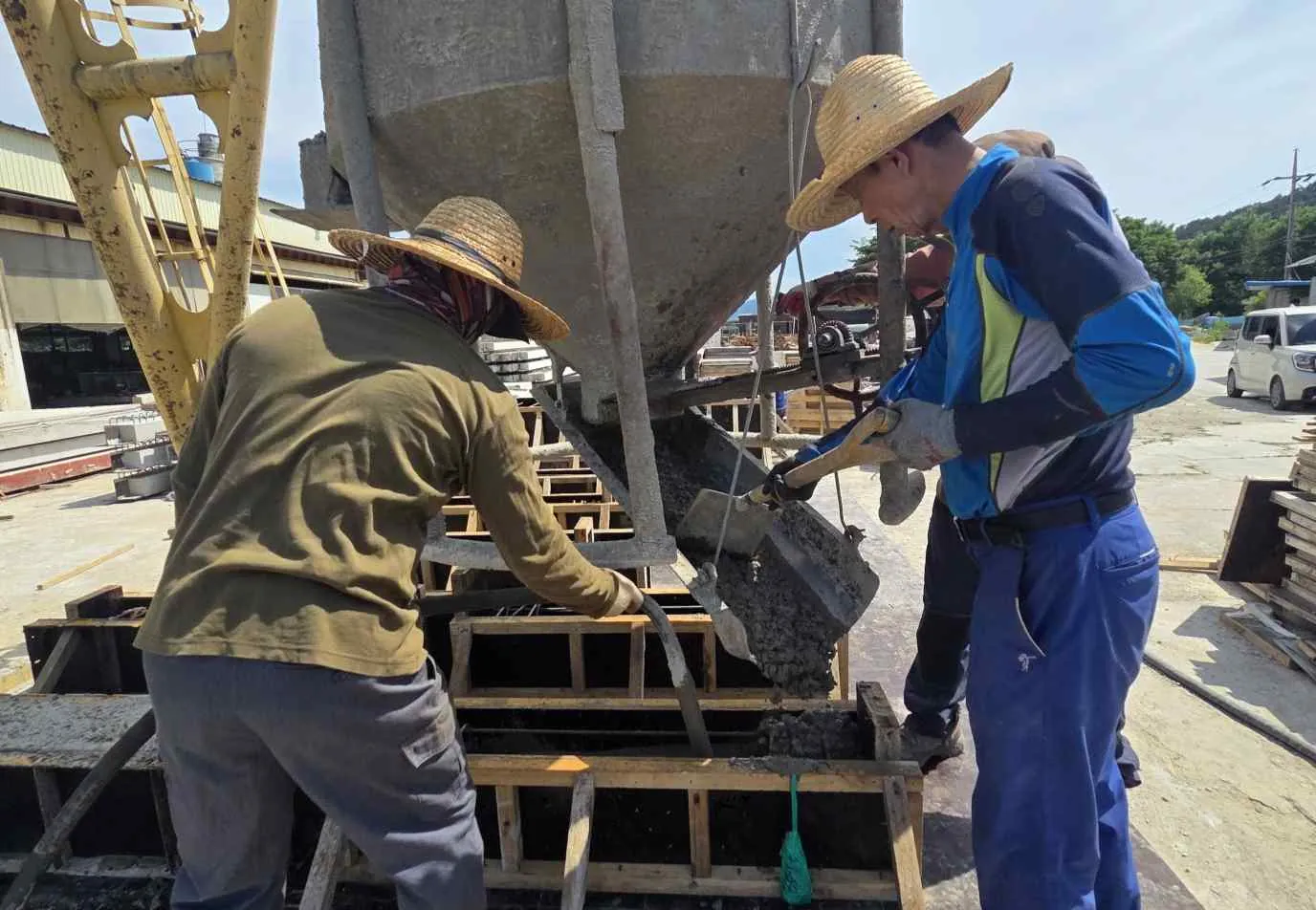
Background
Why this research
- 01 Carbon reduction in construction is urgent for Net Zero, yet most biochar research has been limited to carbon sequestration through soil burial, with little work on application to cement-composite RC members.
- 02 Prior work allows only a limited 5% cement replacement by weight, and large dosages impair workability. Biochar-graphene synthesis can increase carbon sequestration and impart conductivity.
- 03 No prior work has imparted self-sensing or graphene-based conductivity to biochar cement composites for application to RC members, and finite-element material models for such new concrete are almost nonexistent. This laboratory pioneers that gap.
Mission
Final goal
We develop biochar-graphene-based conductive carbon-sequestering cement composites, apply them to structural members, secure structural safety, and bring economy and eco-friendliness to maintenance, pioneering sustainable structural maintenance technology.
Research teams
Three research teams
- Team 1 Won-Chang Choi and Chan Ho Park (early-career)
Biochar-graphene composites for carbon-sequestering cement composites, with materials performance evaluation
- Team 2 Won-Chang Choi and Seung-Wook Seok (early-career)
Self-sensing performance of conductive carbon-sequestering concrete and its application
- Team 3 Soo-Yeon Seo and Seung-Wook Seok (early-career)
Application of conductive carbon-sequestering concrete to structural members, with analysis methods
Participating institutions
Lead and co-research
- Lead institution
Gachon University
Lead institution. Principal investigator Prof. Won-Chang Choi (School of Architecture). Leads biochar-graphene synthesis and carbon-sequestering cement composite development, self-sensing sensors and finite-element material models, and application to structural members. Co-investigators Prof. Seung-Wook Seok (School of Architecture) and Prof. Chan Ho Park (Dept. of Chemical, Biological and Battery Engineering).
-
Korea National University of Transportation (KNUT)
Co-research institution. Co-investigator Prof. Soo-Yeon Seo (School of Architecture). Leads RC member structural performance, long-term behavior, and acoustic-emission multi-sensing monitoring.
Global network
International collaboration
To build a global network, collaboration is planned with three international researchers. Kin Liao leads nanocomposite lightweighting and applications, Toheed Akhtar leads graphene-based porous composites and scale-up processes, and Donghyun Kim leads computational fluid dynamics (CFD) for chemical-process optimization.
Production and application
Biochar production on site
A continuous pyrolysis line produces biochar as feedstock for graphene modification, which is then fabricated into cement composites for testing.
-
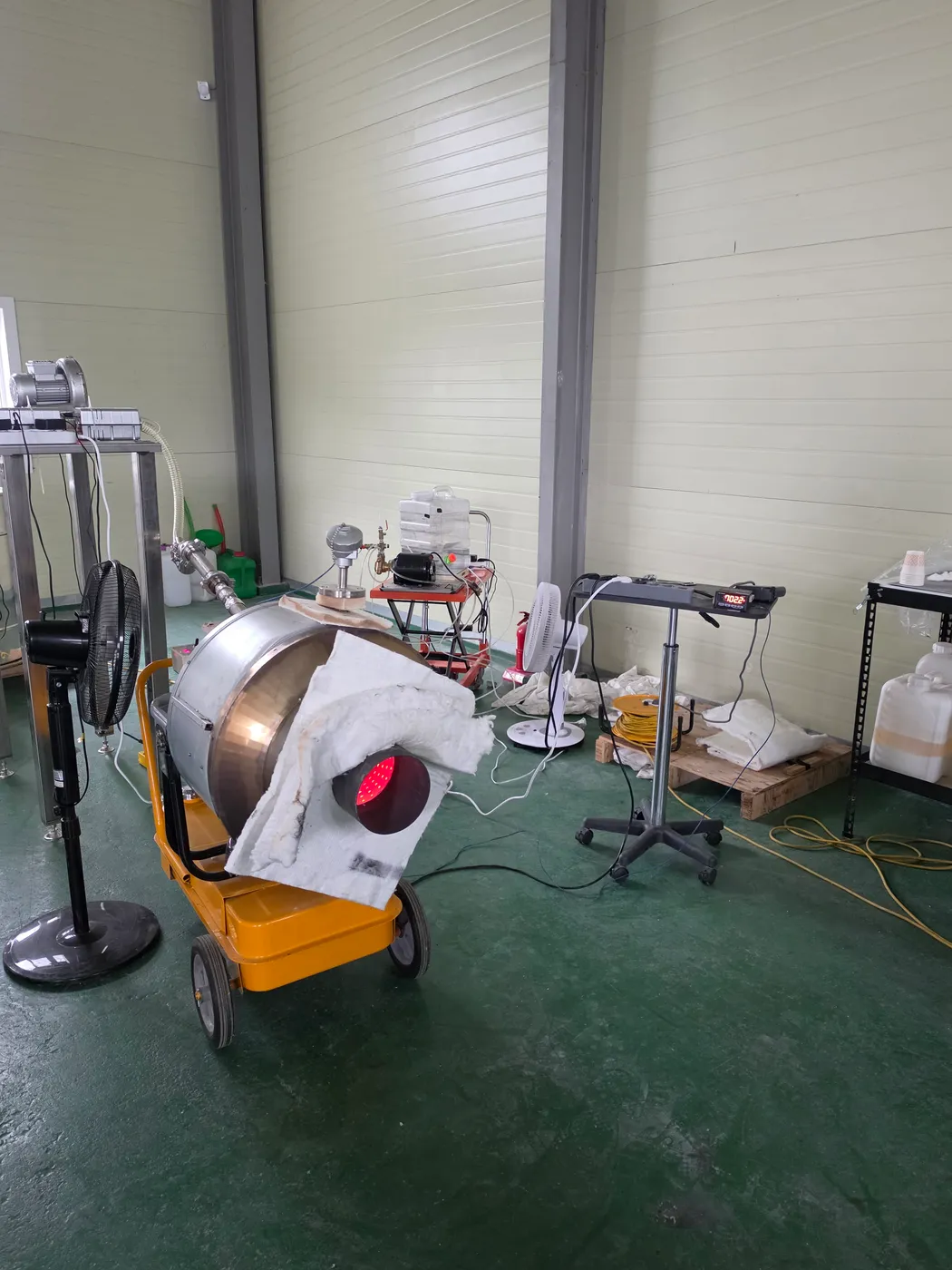
Pyrolysis reactor with glowing crucible -
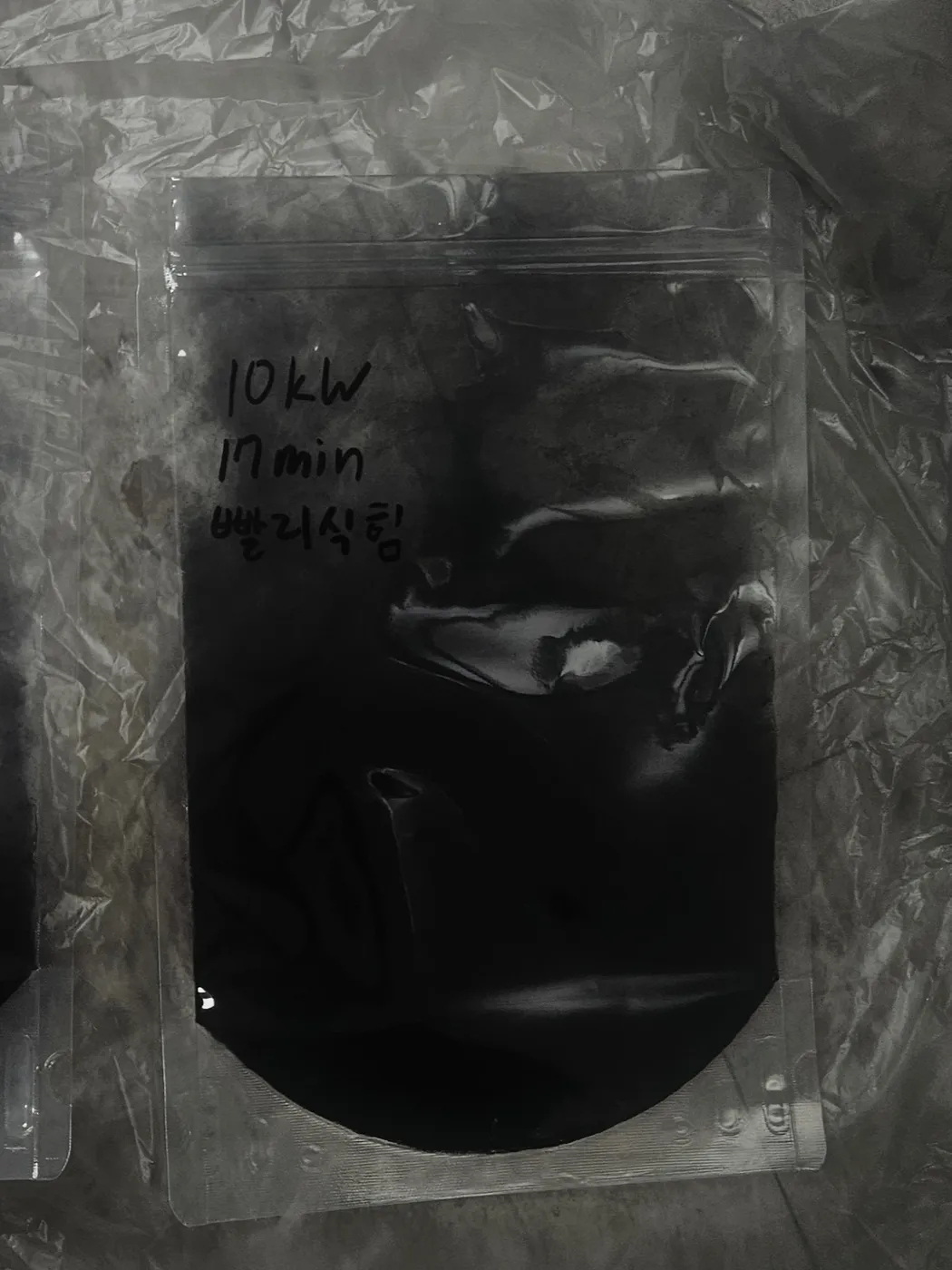
Continuous pyrolysis line
Support
Funding
Funding agency: National Research Foundation of Korea (NRF), Basic Research Laboratory (Pioneer type, group-research support R&D). Grant number RS-2024-00408370. Project period 2024-08-01 to 2027-04-30. Budget figures are not disclosed.